
Hi! If you’re reading this post, thank you for taking the time to learn a bit about what it’s like to be a mountain bike guide in Cusco, Peru. Here, I’ll tell you all about a typical workday and what a guide needs to know.
Is it easy to be a Mountain Bike guide in Cusco, Peru?
To answer the question of whether being an MTB guide is easy or difficult, I will explain everything below, and then you can judge for yourself.
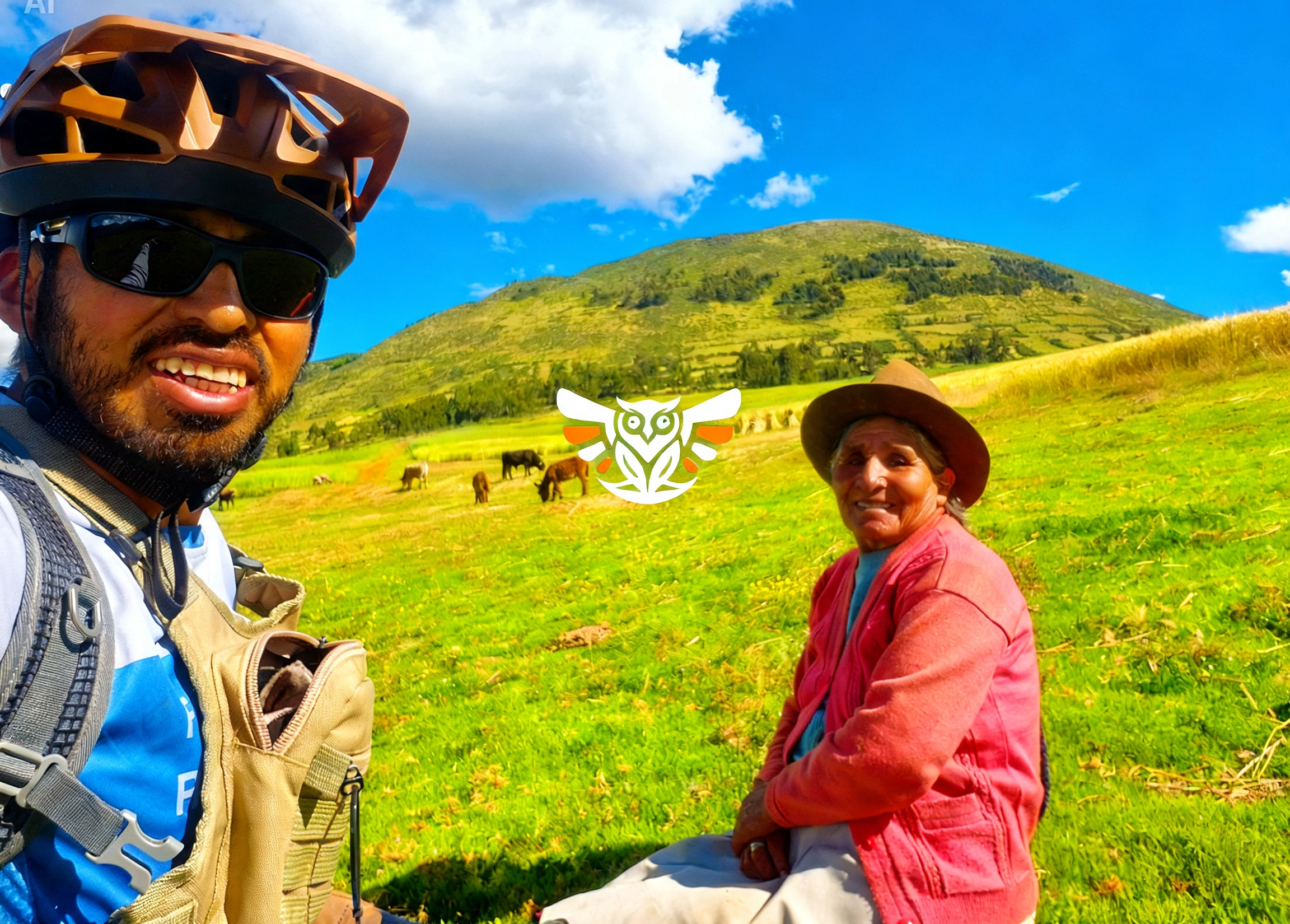
What does an MTB guide need to know?
First, you need to know how to ride a bike, depending on the category of cyclists you wish to lead;
What are the differences between the categories?
Family ride: This service is very relaxed; you ride along a wide, flat path at a slow pace, with virtually no risk of accidents.
Cross-country: For this category, the guide needs good physical stamina, as cross-country involves long distances—ranging from 20 to 40 km—and mixed terrain (gravel or trails) that is not overly technical.
Enduro: Characterized by highly technical trails, steep mountain descents, rock gardens, and tight turns. Naturally, this requires good technique and physical stamina for short climbs, especially since most routes in Cusco and the Sacred Valley start at an altitude of 4,300 meters and typically cover distances of 15 to 30 km.
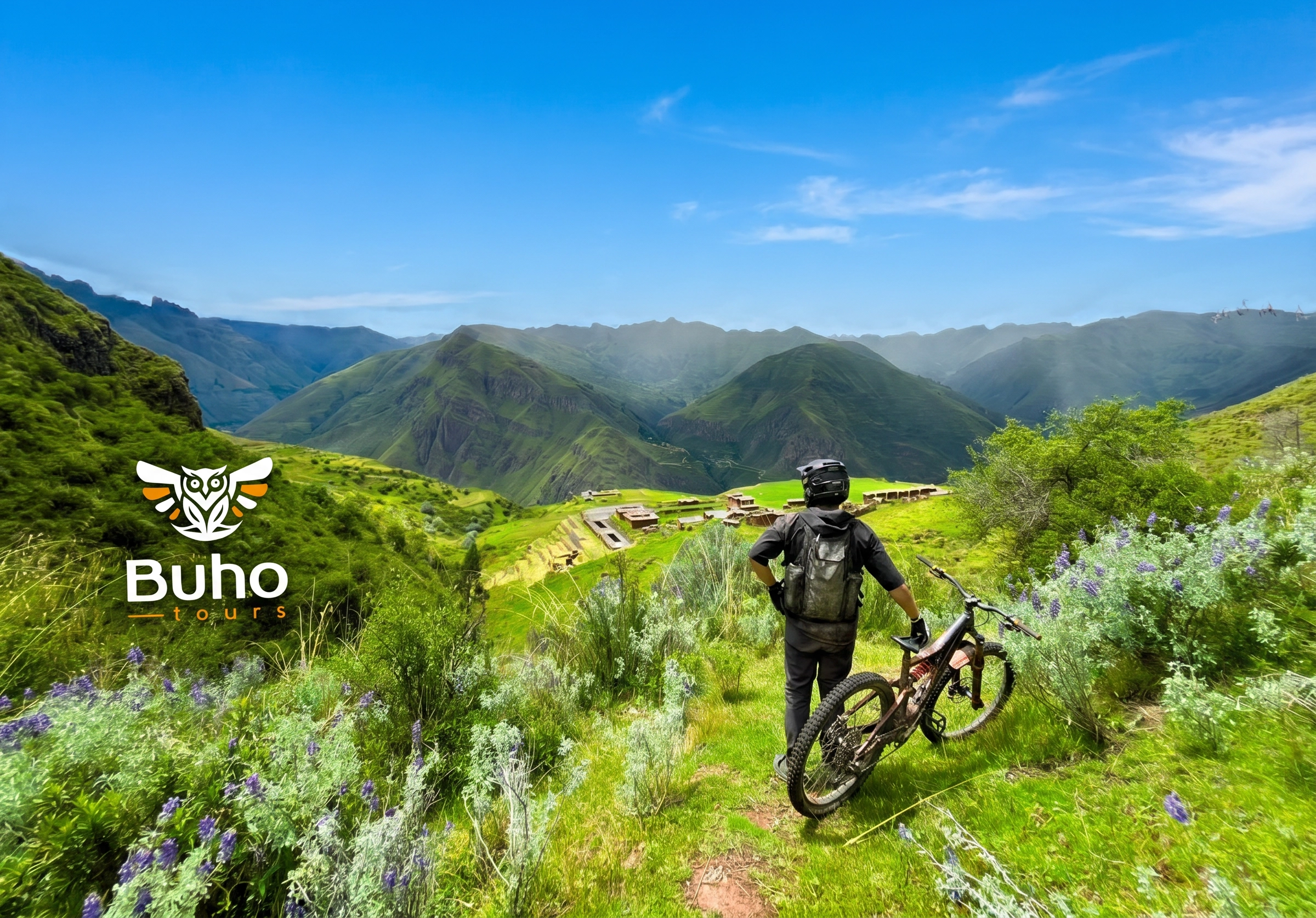
Downhill: Downhill is undoubtedly an extreme adventure sport characterized by rapid descents and jumps off ramps of various sizes. It typically takes place in bike parks, with courses ranging from 5 km to a maximum of 16 km.
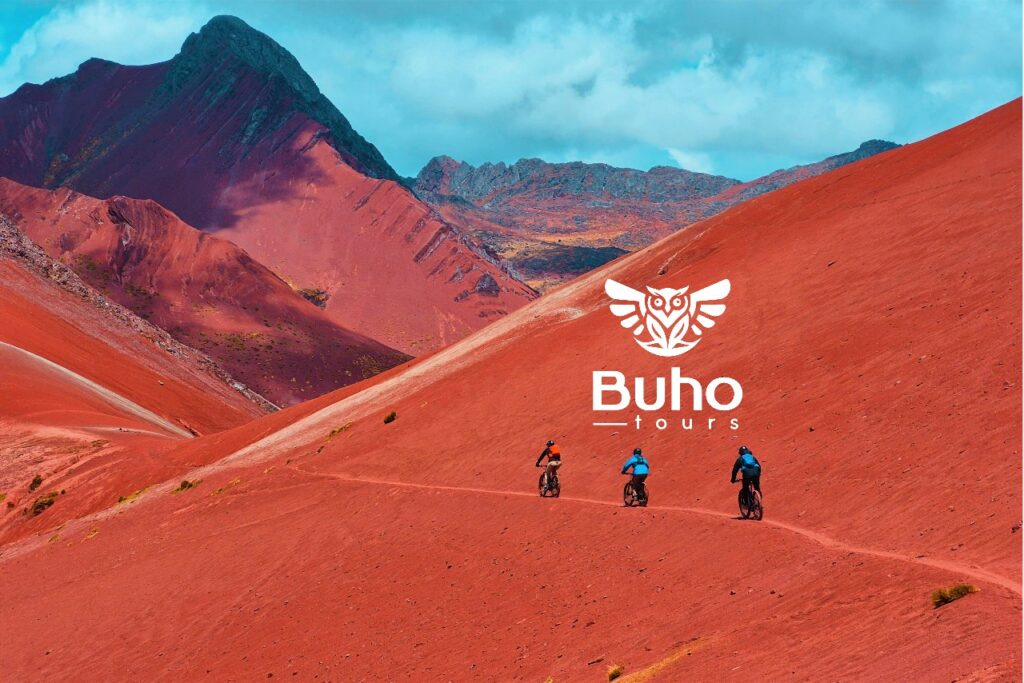
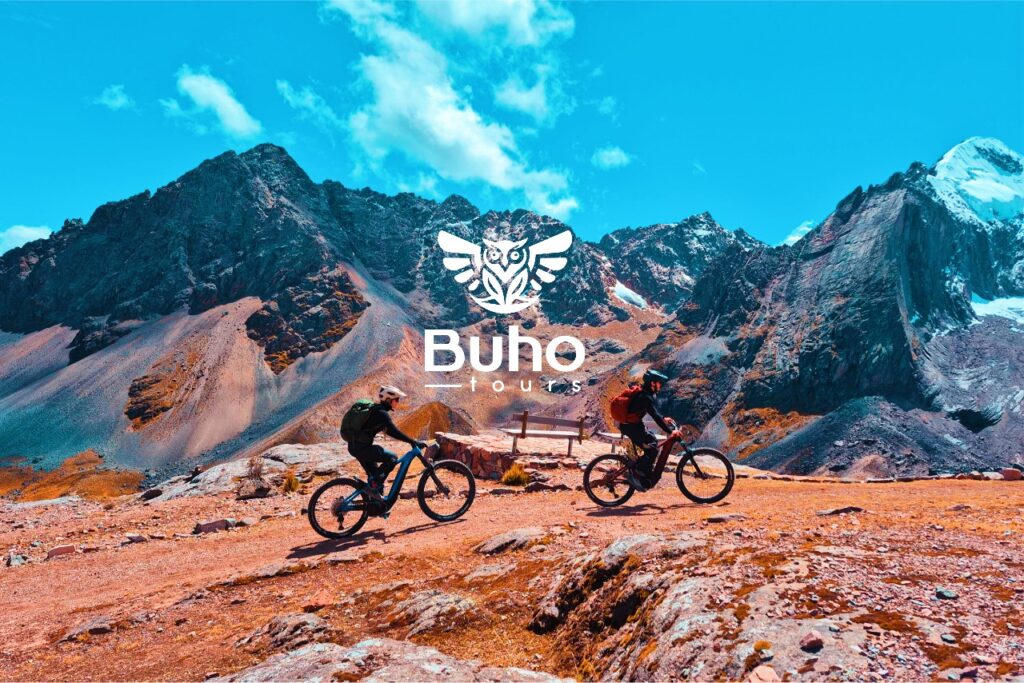
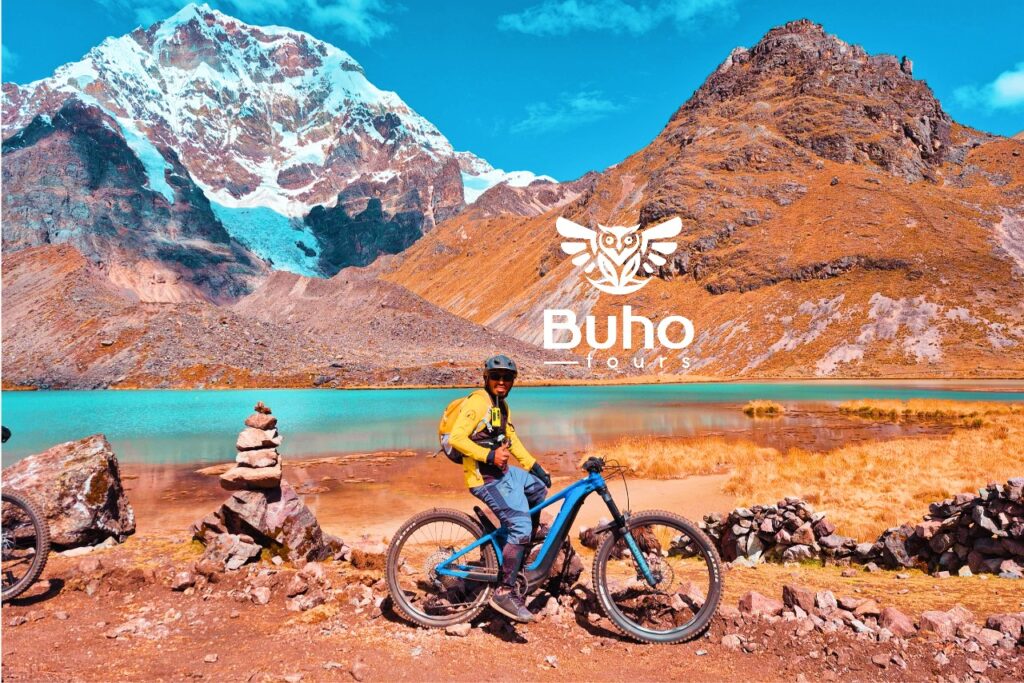
E-bike: E-bike rides are most common on wide trails and are not dangerous; the amazing thing is that they take you to unique locations like the Rainbow Mountain (Montaña de 7 Colores) and Ausangate. They are not recommended for technical trails, however, due to the significant weight of the electric bicycle.
What MTB gear is needed for these categories?
For a standard bike ride, you can use a hardtail (front suspension only) or full-suspension bike, along with eyewear, a helmet, and gloves.
Cross-country riding requires traveling as light as possible; a hardtail bike, eyewear, a helmet, and gloves are used.
Enduro tours require substantial protective gear—such as knee pads, elbow pads, gloves, and a full-face or open-face helmet—as well as a full-suspension bike with 12 speeds for climbing short inclines.
Downhill riding mandates the use of a full-face helmet, eyewear, body armor, knee pads, elbow pads, and gloves, along with a downhill bike featuring a dual-crown fork and—naturally—full suspension.
For e-bike tours, the recommended gear consists of a helmet and gloves.
The guide must select the appropriate category, bicycle type, and safety equipment for the ride.
What does an adventure guide carry in their backpack?
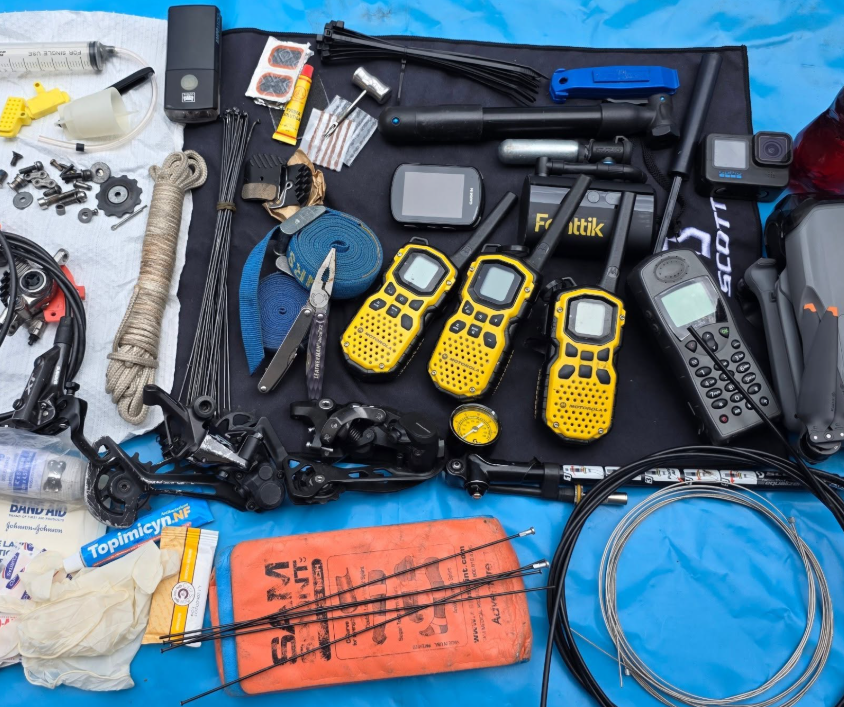
A true guide should always carry a small backpack containing the following essential items:
- Repair tools
- Hex key
- Chain tool
- Zip ties
- Mechanical or electronic tire pump
- Suspension pump
- Spare inner tube
- Extra gloves for cold weather
- Bandana
- First aid kit
- Gauze
- Tape
- Bandages
- Alcohol
- Soap
- Oxygen
- Anti-inflammatory medication
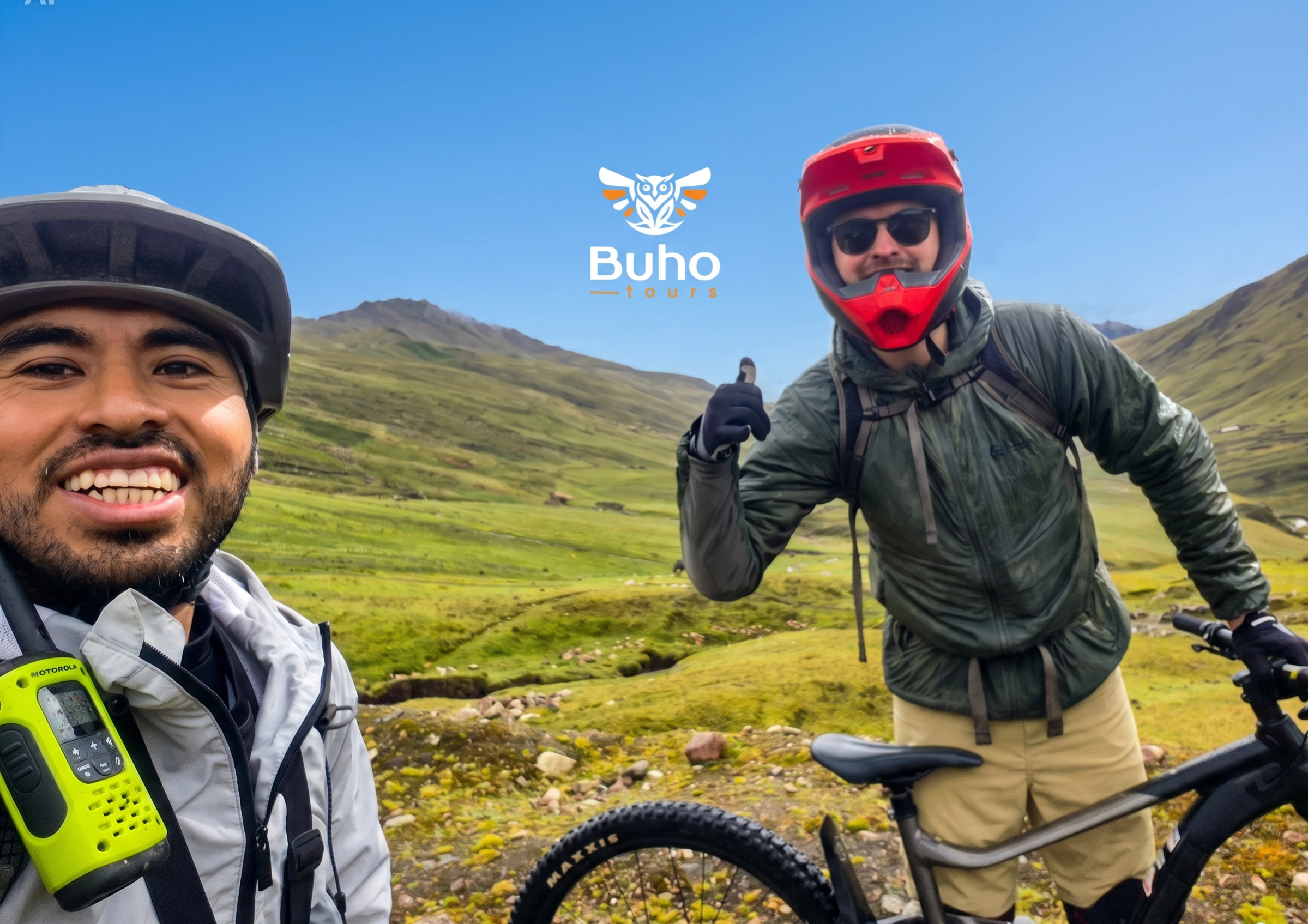
- Two-way radios
Depending on the size of the cycling group, 2 to 4 two-way radios must be carried—distributed among the guides and the support vehicle driver.
These radios have a range of 30 km and are used, of course, in emergencies such as accidents, bicycle mechanical failures, cyclists straying off-course, or route changes.
Carrying this extra gear is mandatory for the cyclist whenever they go out on a tour.
Essential knowledge for an MTB guide
Knowledge of bicycle repairs: imagine a mechanical failure occurring on the mountain, where it is just you and the cyclist.
Knowledge of first aid: it is crucial to know how to use a basic first aid kit and perform Cardiopulmonary Resuscitation (CPR).
Knowing the fastest way to rescue an injured cyclist and having contact details for emergency services and local police.
It is important for the guide to be well-versed in the many mountain bike routes available in Cusco, Peru. Why? In case of emergencies—or if a tourist lacks the technical skills they claimed to have—the guide can switch to an easier route.
An MTB guide’s experience is a major asset; having navigated various situations—good and bad—involving cyclists, weather, equipment, routes, and local people, they can anticipate and prepare for these factors in advance.

Communication between the guide and the cyclist is paramount; if the guide doesn’t speak English, communication becomes impossible. Furthermore, when cycling in the Cusco Andes, knowing Quechua is a requirement because most routes are private and belong to high-Andean communities—imagine a local speaking to you in Quechua, asking, “What are you doing here? You can’t pass!”
The most important quality in an MTB guide is empathy toward the cyclist—monitoring their physical condition and skills at all times, noticing if they want a photo or need a rest, and making them feel like part of the family. That is exactly what we do at the Buho Tours team!
What should be checked before starting the tour?
- Check that the bicycles are clean and in good working order, including tire pressure and suspension.
- Verify that all safety gear—helmets, gloves, knee pads, and elbow pads—is present and complete.
- Also, check the toolkit and spare parts.
- Ensure communication radios and the first aid kit are fully stocked.
- Obtain an emergency contact for the cyclist—this is crucial.
What should the guide check during the tour?
- Ensure the cyclist is wearing all safety gear.
- Advise the cyclist to bring essentials for the route, such as a small backpack, water, fruit, a waterproof jacket, and sunglasses.
- Recommend using sunscreen during the May–October season, and wearing warm clothing and bringing a change of clothes from November to April.
- Assess the cyclist’s technique and physical condition during the first few minutes to decide whether to modify the route, continue or end the tour.
- Monitor the weather constantly.
- Provide instructions on using standard and electric bicycles.
What is checked at the end of the bike tour?
Most importantly, the cyclist: are they okay? Are they happy? Did they return with all their gear?
Then, the bicycle: check for any broken parts or accessories.
Finally, share all photos and videos taken by the guide with the cyclist at the end of the tour.
Are tourist guide credentials or ID cards necessary?
Some mountain biking companies use guides who lack official guide credentials; is this a bad thing?
It isn’t necessarily bad, but there is an 85% chance that the quality of service on these bike tours will be poor, for the following reasons:
- The guide only has knowledge of bicycles.
- They do not offer quality service.
- They lack access to archaeological sites.
- If an incident occurs, there is no tourism authority to hold them accountable, as they do not hold an official ID card.
- Many of these bike guides are foreigners.
Now that you know about credentials, what do you prefer: just a bike guide, or a local, highly educated bike guide who holds official credentials?
What does an official tourist guide’s ID card look like?
If safety is a priority for you, ask to see the credential shown below; it is important to be aware of these details.
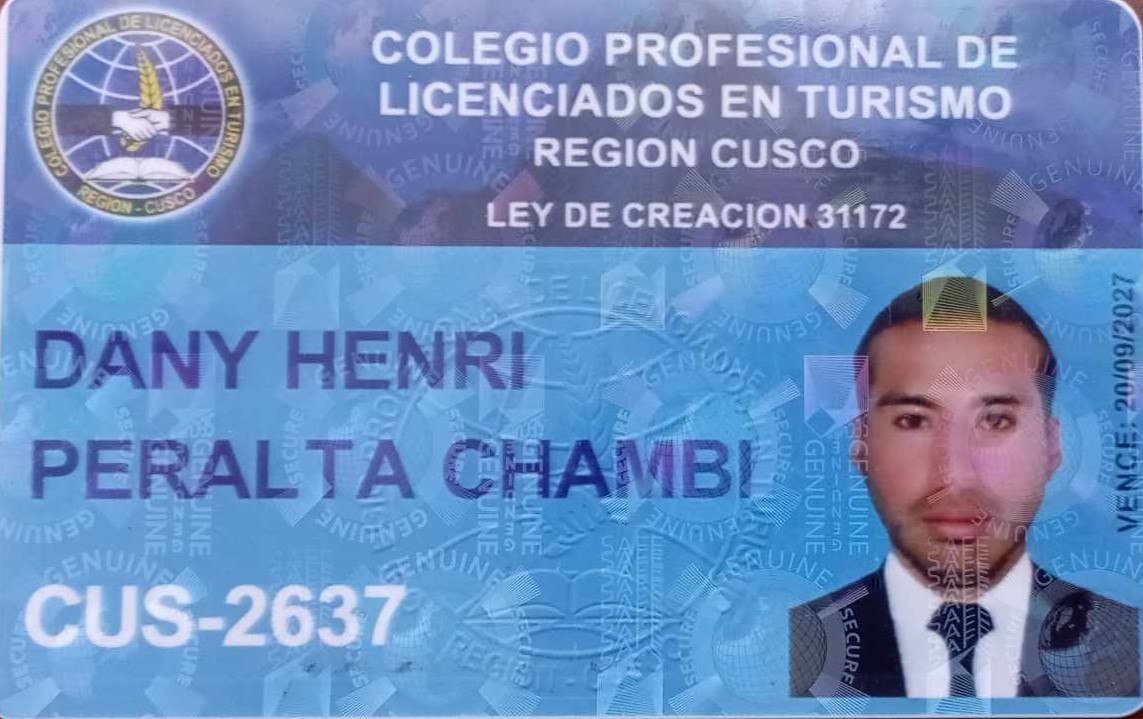
Now that you know what an MTB guide’s job is like and what is needed for a bike excursion, does it seem easy to you?
See you soon, and have a great day!